
Why do Glenmoor doors need springs while Ardenwood needs openers?
Published Updated
Glenmoor's older tracts wear out springs first, Ardenwood's newer doors wear out openers first, and the difference comes down to build year and cycle count, not luck. Navarro Garage Door prices spring replacement from $200 and opener repair from $200 across Fremont, with the final number set at the door.
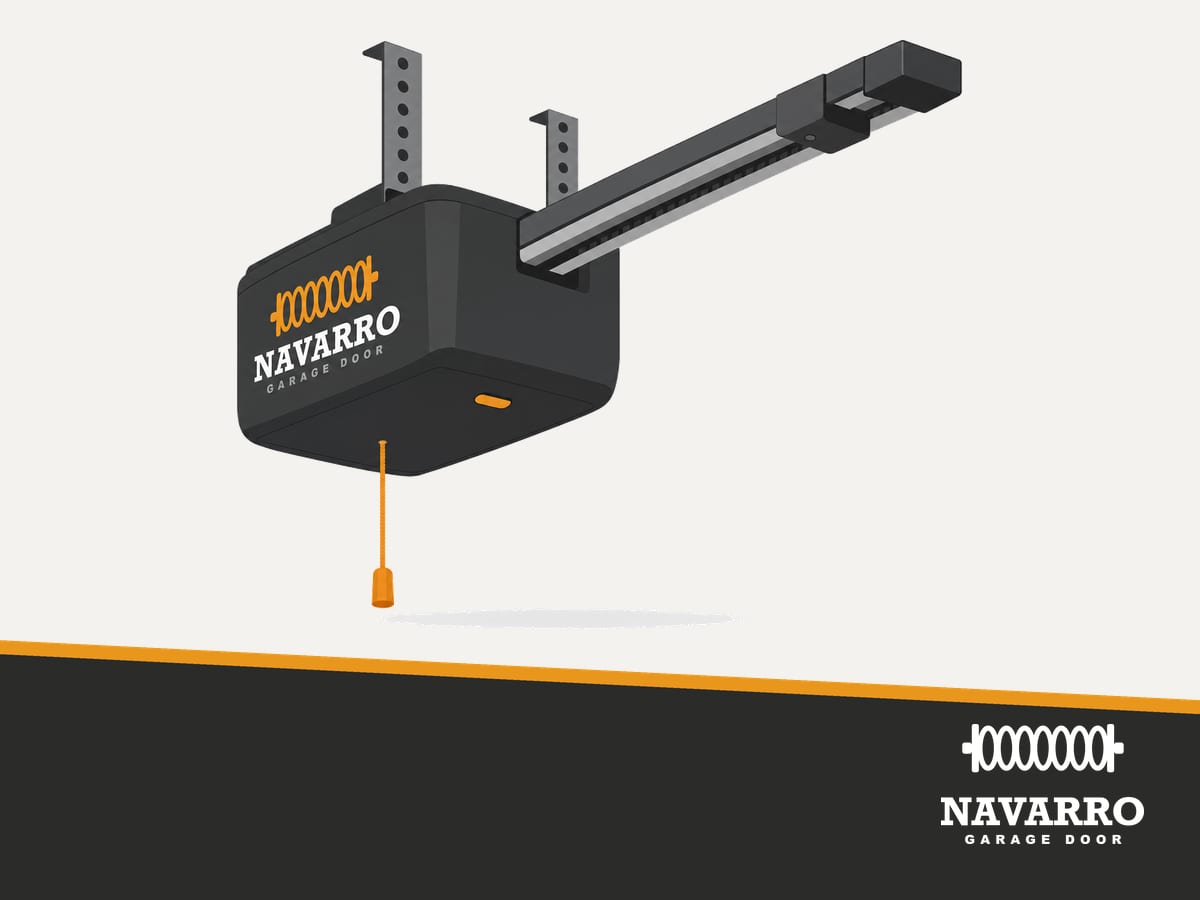
Fremont was assembled in 1956 from five separate towns, and that history still shows up in the garage doors. Glenmoor, Centerville, and Irvington carry housing from the 1950s through the 1970s, while Ardenwood went up roughly twenty years later. The build decade sets which part fails first, the spring or the opener, and that's mechanical, not a guess.
Why does a 1956 merger still matter for garage doors today?
Fremont didn't start as one city. It formed in 1956 when Centerville, Niles, Irvington, Mission San Jose, and Warm Springs merged into a single municipality. That's a fact about incorporation, not construction, but the districts kept building on their own timelines afterward, and that's what still matters mechanically.
Citywide, 75.2% of Fremont's housing predates 1980, with the 1970s and 1980s each making up a little over a fifth of that total. So most of the city's garage doors are old enough to have gone through at least one full spring cycle already, and some are on their second set. Which district you're in tells you roughly where on that timeline your door sits, and that's the useful part for figuring out what's likely to fail next.
What makes Glenmoor's doors different from Ardenwood's?
Glenmoor Gardens is 32 tracts of detached ranch houses built between 1951 and 1966, about 1,900 homes on roughly 595 acres. A door installed in that window, even if it's been replaced once since, has usually logged more open-close cycles than a door in a district built two decades later. A common 10,000-cycle spring on a door that opens four times a day reaches the end of its rating in about seven years, so older housing stock is simply further along that curve.
Ardenwood is about twenty years younger than Glenmoor's tracts. Fewer years in service means fewer cycles on the spring, so when something goes wrong on an Ardenwood door, the spring is less often the first suspect. The opener, the remote, or the sensors are just as likely, because those parts fail on their own schedule, not on a cycle count tied to door weight.
How do I tell a spring problem from an opener problem?
The spring, not the opener, carries the weight of the door. If the door feels heavy, won't stay partway open, or slams down fast, that's spring behavior. If the door hesitates, won't respond to the remote, or reverses without touching anything, that points to the opener instead. Those are two different repair paths with two different parts involved.
Opener repair covers the drive gear, logic board, travel limits, or sensors out of alignment, and it starts at $200. What it costs beyond that depends on which of those four it turns out to be, and that gets confirmed on site before anything is touched. A spring replacement on a standard door, by contrast, starts at $200 installed and takes about an hour, because it's a single, well-defined mechanical swap.
What about a two-spring door in an older district?
Most garage doors built from the 1950s onward in Fremont use two torsion springs rather than one. If one spring breaks, the other has done the same number of cycles and is close behind it. A pair of torsion springs replaced together starts at $350 installed, with the door balanced in the same visit, and it costs less than scheduling two separate single-spring visits months apart.
Extension springs, the kind mounted along the horizontal tracks rather than above the door, are also replaced as a pair, starting at $225 installed, with the safety cable through each one checked. Glenmoor's older ranch tracts are more likely to still have one of these two spring types nearing the end of its rated cycles, simply because of how long they've been operating.
Does California's opener law change what gets installed?
California Health and Safety Code section 19892 has required battery backup on every residential garage door opener sold or installed in the state since July 1, 2019. That applies whether the door is in a 1960s Glenmoor tract or a newer Ardenwood build, so any opener installed today meets that standard regardless of district.
A new belt drive opener installed on a standard door starts at $600 and includes that required battery backup. For a district like Ardenwood, where the door itself may be in good shape but the opener has reached the end of its working life, a straight opener swap is often the more direct repair than troubleshooting an aging logic board piece by piece.
What should a Fremont homeowner check first?
Start with what the door is doing, not with its age. A heavy door, a door that won't hold position, or a door that slams are spring symptoms. A door that won't respond to the remote, reverses on its own, or stalls partway are opener symptoms. That split holds whether the house is in Fremont, Newark, or Union City.
A tune-up starts at $125 for one door and covers balance, lubrication, hardware, cables, opener settings, and the safety reverse test, which is a practical way to find out which system is actually the problem before committing to a bigger repair. The visit and the quote are free either way, and the price for whatever the visit turns up is given before any work starts.
Common questions
Why would a newer Ardenwood door have opener trouble instead of spring trouble?
Ardenwood's housing stock runs about twenty years younger than Glenmoor's, so its springs have handled fewer cycles. The opener's logic board, drive gear, or sensors wear on their own timeline, unrelated to spring age, so they're often the earlier failure.
If my door is slow to respond, is that the spring or the opener?
A slow response usually points to the opener, the remote battery, or sensor alignment rather than the spring. A failing spring shows up as a heavy door or one that won't stay put, not a delayed response.
Does Fremont's 1956 merger mean every district ages the same way?
No. The merger created one city from five towns, but each district built out in a different decade, so Glenmoor's 1950s and 1960s tracts carry different wear than Ardenwood's later construction.
What does an opener repair visit actually check?
The visit checks the drive gear, logic board, travel limits, and sensor alignment, since any of those can cause the same symptom. Opener repair starts at $200 and the exact cause sets the final number.
Can a tune-up tell me whether my district's door needs a spring or an opener fix?
Yes. A tune-up covers balance, lubrication, hardware, cables, opener settings, and the safety reverse test, so it catches which system is actually failing before a bigger repair gets scheduled.